
 Business License
Steel Railway Rail: Key Grades, Strength Levels and Applications for Modern Rail Projects
Steel Railway Rail: Key Grades, Strength Levels and Applications for Modern Rail Projects
Steel railway rail is a basic part of railway infrastructure. It supports the wheels, carries the load of trains and provides a stable path for railway operation. Different rail projects require different rail sections, steel grades and strength levels.
With railway, mining and industrial transport projects developing in different regions, the selection of suitable steel rail has become an important part of project planning.
Three Main Types of Steel Rail
Steel rails can generally be divided into light rail, heavy rail and crane rail according to their application and section weight.
Light rail is mainly used for mining railways and industrial tracks. Common sizes include 5 kg/m, 8 kg/m, 11 kg/m, 15 kg/m, 18 kg/m, 24 kg/m and 30 kg/m.
Heavy rail is designed for passenger and freight railway systems. Common specifications include 38 kg/m, 43 kg/m, 50 kg/m, 60 kg/m and 75 kg/m. These rails are designed for higher axle loads and regular train operation.
Crane rail is used for overhead cranes and other heavy lifting equipment. Common models include QU70, QU80, QU100 and QU120. The rail section is selected according to the crane load and track design.
Steel Grades and Material Options
Rail performance depends largely on its steel grade and production process. Carbon-manganese steel is widely used for standard railway applications, while alloy steel can provide higher strength and wear resistance.
Common railway rail grades include U71Mn, U75V, U71MnG, U75VG, U76CrE and R350HT. Other steel grades such as Q235B, 50Mn and 60Si2Mn can also be used for specific rail and industrial applications.
For projects that require higher wear resistance, alloying elements such as vanadium, titanium or chromium can be added to improve the properties of the steel.
Strength and Wear Resistance
Railway rails are exposed to repeated wheel loads, impact and friction. For this reason, tensile strength and wear resistance are important when selecting rail products.
Standard rail grades may have a tensile strength of around 700 MPa or higher. High-strength rails can reach 900 MPa or more, while wear-resistant rail grades can reach approximately 980 MPa or higher.
Heat-treated rails are another option for demanding railway applications. Through controlled heat treatment, the steel structure can be refined to improve strength, hardness and toughness.
The appropriate grade depends on factors such as axle load, train speed, traffic volume, curve radius and expected service conditions.
Applications in Different Projects
Steel railway rails are used in a wide range of transportation and industrial projects.
For mainline railways, heavy rail is commonly selected for passenger and freight transportation.
For mining operations, light rail is often used for internal transport systems and mine tracks.
For industrial facilities, rail systems can be used to move heavy materials and equipment between production areas.
Crane rails are mainly installed under overhead cranes and other lifting systems where the rail must withstand concentrated loads and repeated movement.
Rail replacement and maintenance projects may also require specific rail sections that match the existing track system.
Quality Control and Supply
Rail quality is important because defects in the rail can affect track stability and operating safety. Production normally includes control of chemical composition, dimensions, mechanical properties and surface quality.
Depending on project requirements, railway rails can be supplied in different lengths, including 8 m, 10 m and 12 m, with customized lengths available for certain projects.
Rails are normally supplied with a black rolled surface. For export orders, waterproof packing can be used to reduce the risk of moisture and corrosion during transportation.
Steel rails can be shipped by container or bulk vessel, with sea and land transportation options available according to the destination and order quantity.
Selecting the Right Rail for a Project
There is no single rail specification suitable for every project. Buyers should consider the rail weight, section dimensions, steel grade, tensile strength and application before placing an order.
For railway construction, factors such as axle load and traffic conditions are important. Mining and industrial projects may focus more on rail weight, installation conditions and wear resistance. Crane rail selection should take into account the crane capacity and wheel load.
For international procurement, buyers should also confirm the required technical standard, rail length, packing method and inspection requirements before production.
Conclusion
Steel railway rail remains an important structural component in railway, mining and industrial transportation systems. Light rail, heavy rail and crane rail serve different applications, while different steel grades and heat-treatment processes provide different levels of strength and wear resistance.
Choosing the correct rail specification based on project conditions can help achieve stable track performance and longer service life. For international rail projects, clear technical requirements and quality inspection are also important parts of the purchasing process.
Recently Posted
-
GI Steel Coil: Spangle Types and Zinc Coating
October 28, 2026GI Steel Coil: Spangle Types and Zinc CoatingHot-dip galvanized steel coil is widely used in construction, home appliances, automo Read More
-
Welded Steel Pipe: Welding Methods and Quality Checks
October 27, 2026Welded Steel Pipe: Welding Methods and Quality ChecksWelded carbon steel pipe is widely used in construction, mechanical manufactu Read More
-
Hot-Dip Galvanized Steel Strip: Surface Finishes and Industrial Applications
October 26, 2026Hot-Dip Galvanized Steel Strip: Surface Finishes and Industrial ApplicationsHot-dip galvanized steel strip is widely used in const Read More
-
Galvanized Steel Coil: Choosing the Right Zinc Coating and Specifications
October 23, 2026Galvanized Steel Coil: Choosing the Right Zinc Coating and SpecificationsGalvanized steel coil is widely used in construction and Read More

Contact Us
Recommended Products
-
 ASTM A36 Hot Rolled Steel Coil Carbon Steel Pickled and Oiled for Stamping and FormingUS$ 450 - 480MOQ: 10 Tons
-
Cold Rolled Steel Coil SPCC DC01 for Deep Drawing and StampingUS$ 430 - 480MOQ: 10 Tons
-
Galvalume Steel Coil AZ150 ASTM A792 for Industrial Siding and HVAC SystemsUS$ 550 - 580MOQ: 10 Tons
-
Prepainted Galvanized Steel Coil Color Coated PPGI Coil for Roofing and Sandwich PanelsUS$ 480 - 520MOQ: 10 Tons
-
Cold Drawn Precision Steel Pipe Tight Tolerance for Pneumatic Hydraulic Cylinder ApplicationsUS$ 570 - 590MOQ: 10 Tons
-
Hot Rolled Steel Plate ASTM A36 4143 S355 65Mn for Structural and Heavy Equipment ShipbuildingUS$ 420 - 445MOQ: 10 Tons
-
Precision Cold Rolled Steel Sheet SPCD DC03 for Fine Blanking and BendingUS$ 450 - 485MOQ: 10 Tons
-
Hot Dip Galvanized Steel Sheet DX51D Z Custom Width and Thickness for Fabrication Roofing and Automotive PanelsUS$ 520 - 550MOQ: 10 Tons
-
Galvanized Steel Decking is a Widely Used Type of Profiled Steel Sheet in Modern Steel Structure BuildingsUS$ 510 - 535MOQ: 10 Tons
-
ASTM A572 Steel Sheet Pile U Type and Z Type for Cofferdam and Retaining WallUS$ 500 - 550MOQ: 10 Tons
-
Spiral Welded Steel Pipe Large Diameter for Oil Pipeline and PilingUS$ 450 - 500MOQ: 10 Tons
-
Hot Rolled Seamless Steel Pipe ASTM A106 Grade B for High Pressure ApplicationsUS$ 530 - 550MOQ: 10 Tons
-
Alloy Steel Seamless Pipe for Boiler and Heat Exchanger High Temperature ServiceUS$ 530 - 550MOQ: 10 Tons
-
Welded Steel Pipe ASTM A53 Grade B for Construction Water and Gas TransmissionUS$ 450 - 500MOQ: 10 Tons
-
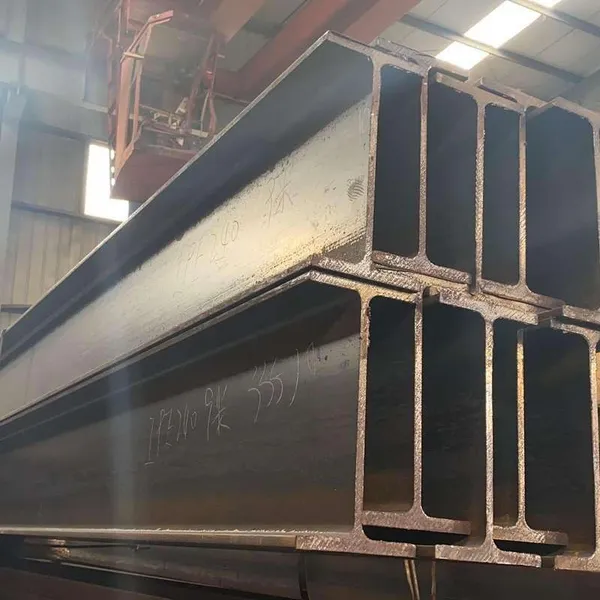
ASTM S235JR S355JR Hot Rolled H Beam Steel Structural Beam for Building Frame and Bridge ConstructionUS$ 420 - 440MOQ: 10 Tons
-
Prestressed Steel Wire PC Wire Indented Surface for Bridge and Beam ConstructionUS$ 530 - 550MOQ: 10 Tons
-
Hot Rolled Steel Wire RodSAE1006 Q195B 82B 5.5 8 12mm for Drawing and FormingUS$ 430 - 450MOQ: 10 Tons
-
ASTM A615 Grade 60 HRB400 500 Hot Rolled Deformed Steel Rebar for Concrete Reinforcement Construction GradeUS$ 400 - 430MOQ: 10 Tons
-
SAE1006 Q195 Gauge Hot Dipped Galvanized Wire Strong Tensile for Fencing Machinery and ConstructionUS$ 470 - 490MOQ: 10 Tons
-
High Carbon Spring Steel Wire ASTM A227 for Compression and Extension SpringsUS$ 560 - 580MOQ: 10 Tons